



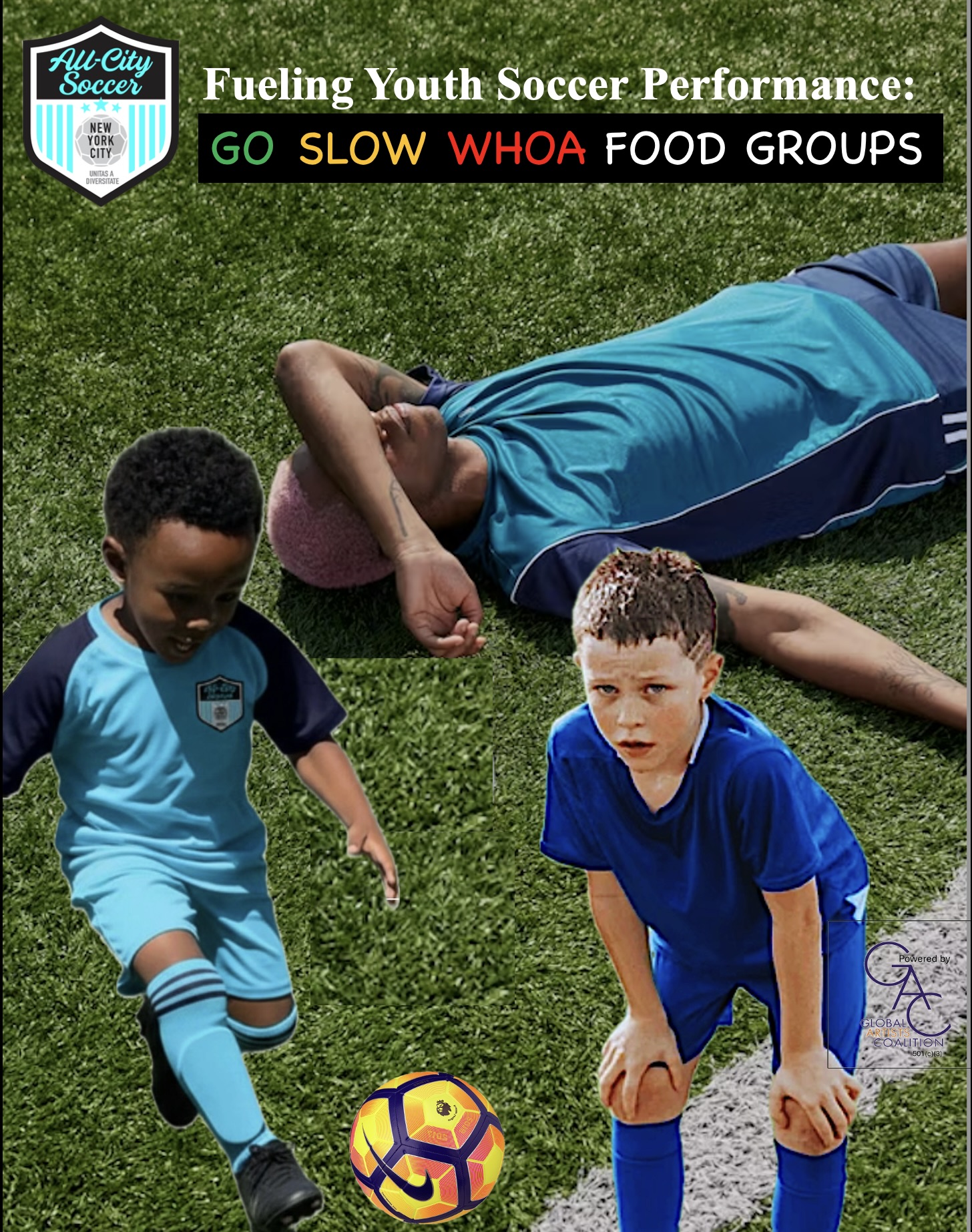





Fueling Youth Soccer Performance: The Go-Slow-Whoa Energy Foods Strategy






How the right foods turn good players at All-City Soccer NYC into great ones
Imagine you’re sprinting down the field, weaving past defenders, lining up the perfect shot—and then your legs turn to wobbly spaghetti. Game over. For thousands of young soccer players, this mid-game meltdown isn’t about fitness. It’s about fuel.
The Mystery of the Disappearing Energy
Jared was a talented 12-year-old at All-City Soccer Club in New York City with a great attitude but a puzzling problem. On some days, she flew down the wing. Other days, she faded by halftime. Her coach recognized the pattern immediately: this wasn’t a conditioning issue. It was nutrition.
Sports nutrition research confirms what coaches see on the field: youth players need steady, high-quality energy to support growth, brain function, and soccer’s relentless stop-and-go demands. The solution isn’t complicated, but it does require understanding how food works as fuel.
Why Energy Matters
Soccer isn’t just running—it’s explosive bursts of sprinting, jumping, and quick directional changes. Young players can burn 500-800 calories per game (equivalent to eating 10 bananas). Their muscles store energy as glycogen, and when those tanks run dry, performance crashes. The right foods refill them efficiently, allowing players to sprint up to 20% farther without tiring. Protein repairs tiny muscle tears from all that kicking, while proper hydration prevents overheating.
Even Premier League professionals rely on strategic fueling during matches. Kids get the same benefits from smart food choices—no special gels required.
All-City Soccer Approach
Teams at All-City Soccer Club now hold “Fuel Huddles” in which players discuss their nutrition choices and learn from one another’s experiences. The message is simple: eat GO, play like a pro, and turn energy into goals.
Your body’s needs are straightforward: carbohydrates from grains and fruit provide the main fuel for play, protein repairs muscles after hard work, and healthy fats support brain function and satiety. Getting the right mix means having both the engine and the gas tank full.
Meet Your Fuel Team: Go, Slow, and Whoa
Coach introduced Jared to a framework used in pediatric nutrition programs nationwide, including Children’s Wisconsin and the CATCH initiative. The Go-Slow-Whoa model sorts foods by how often kids should eat them, making nutrition decisions simple and actionable.
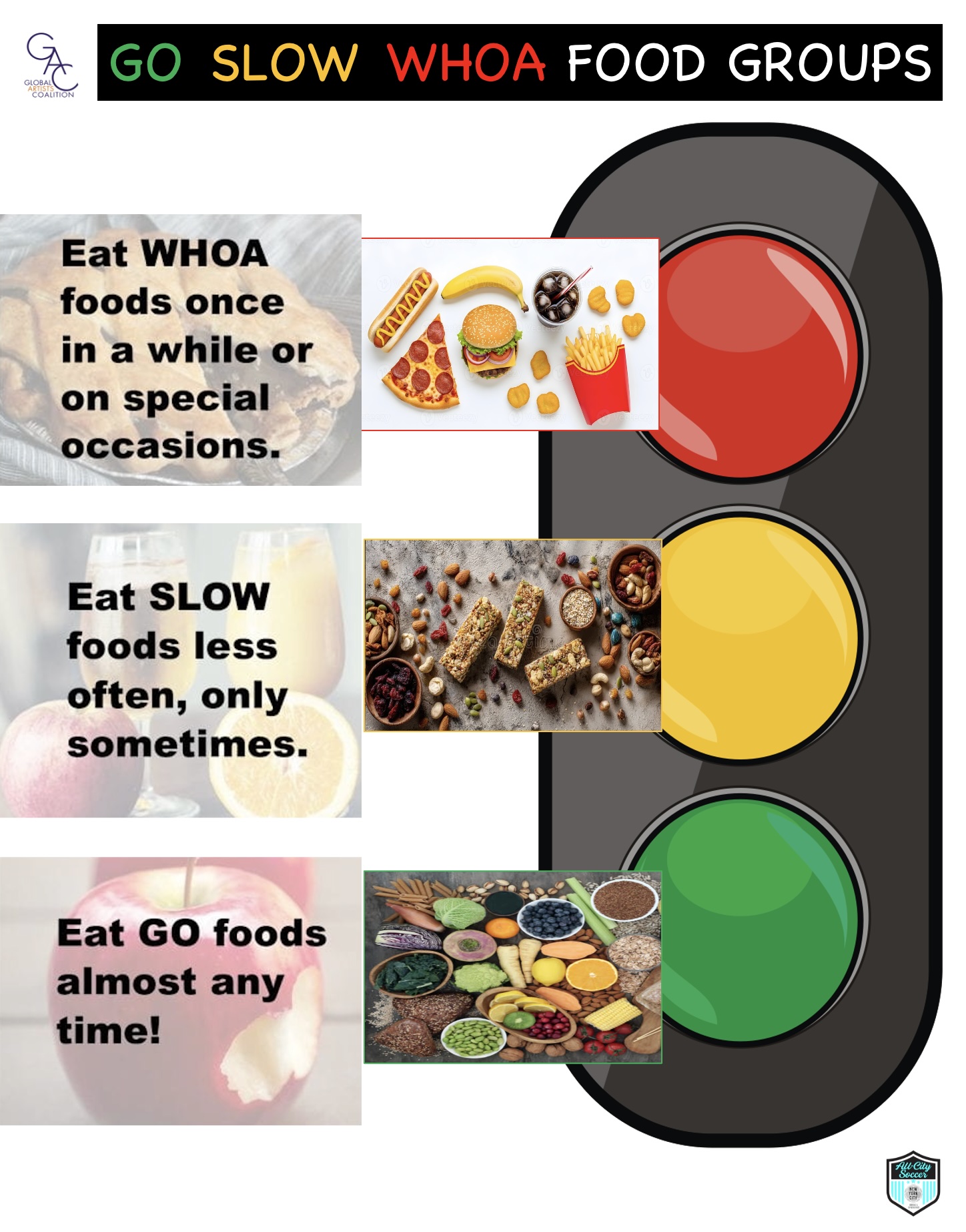
GO Foods: Your Everyday MVPs
These nutrient-dense powerhouses provide sustained energy and can be eaten often. They include whole grains (oatmeal, brown rice, whole-wheat bread), fruits (bananas, apples, berries), vegetables (carrots, peppers, broccoli), lean proteins (chicken, eggs, beans, yogurt), and healthy fats in small amounts (nuts, avocado). Water is the ultimate GO drink. These foods keep glycogen stores full, preventing that dreaded halftime fade.
SLOW Foods: Sometimes Sidekicks
These “sometimes” choices have more added sugar, salt, or processing. They’re not off-limits but shouldn’t be daily staples. Examples include white bread, sweetened yogurt, granola bars with chocolate, sugary cereals, and sports drinks (which are actually useful during long, intense games but unnecessary when lounging on the couch). SLOW foods can fit into a healthy pattern 2-3 times weekly, providing quick energy without the most stable nutrient profile.
WHOA Foods: Once-in-a-While Treats
These foods taste great but don’t support athletic performance. Candy, soda, fried foods, donuts, cookies, and heavily salted chips fall into this category. Relying on WHOA foods before games increases the risk of energy crashes, upset stomachs during play, and missing out on essential vitamins and minerals growing bodies need.
Timing Is Everything
What you eat matters, but when you eat it matters just as much. Coach helped Lena understand the optimal timing protocol:
3-4 hours before game time: Eat a full, GO-heavy meal such as brown rice with beans and chicken, whole-wheat pasta with vegetables, or a turkey sandwich on whole-grain bread with fruit. Focus on plenty of carbohydrates, moderate protein, and limit heavy fat.
1-2 hours before: Choose a light GO snack such as a banana with peanut butter, an apple with nuts, or yogurt with a small granola bar. The goal is to top off energy without feeling stuffed.
30-60 minutes before: If still hungry, choose easy-to-digest options such as a piece of fruit or a few whole-grain crackers. Avoid big, greasy, or sugary foods that can cause cramps during sprinting.
During the game, water is usually sufficient at every break for most youth games. For longer tournaments or hot days, slightly more complex hydration plans can help, but water remains the foundation.
After the game (within an hour): Combine carbs with protein to refuel muscle energy stores and initiate the repair process. Chocolate milk, yogurt with fruit, a sandwich with lean meat or hummus, or rice and beans all work well. This post-game window reduces soreness and supports recovery for the next session.
Building Better Habits
Lena’s transformation didn’t require banning all treats or following a rigid diet. She simply needed to make GO foods her everyday baseline, use SLOW foods strategically and in smaller amounts, and save WHOA foods for true special occasions rather than pre-game habits.
The next weekend, after eating a solid breakfast and a smart snack, Lena noticed something new by the 70th minute: her legs still listened to her brain. It wasn’t magic. It was fuel—planned, timed, and chosen on purpose.
The All-City Approach
Teams at All-City Soccer Club now hold “Fuel Huddles” where players discuss their nutrition choices and learn from each other’s experiences. The message is simple: eat GO, play like a pro, and turn energy into goals.
Your body’s needs are straightforward—carbohydrates from grains and fruit provide the main fuel for play, protein repairs muscles after hard work, and healthy fats support brain function and satiety. Getting the right mix means having both the engine and the gas tank full.
The choice is yours at every meal and snack. What will you choose to power your next game? Join us!